
In short
- Every client conversation writes itself to the right client folder: transcribed, analysed, summarised.
- The weekly status meeting became an email you answer with a single letter.
- The machine remembers and routes; the judgement stays with the human.
First on ourselves
An agency that helps other people adopt AI should be the most AI-native place it knows, otherwise it is selling something it does not do itself. So we made our own operation the testbed. There was no grand plan. We picked one thing at a time that we did by hand every week, and set it up properly once.
The chain from conversation to memory
Every client conversation we have is recorded and transcribed, and then a series of agents takes over. The first works out what kind of conversation it was, whether sales or discovery or an internal session, and files the transcript in the right place. The second analyses it and pulls out the action points and decisions. The third updates that client's context: what is at play, which loops are still open, who is involved. Nobody types any of that out anymore. When I open a client folder on Monday, the state of play is already there, assembled from last week's conversations.
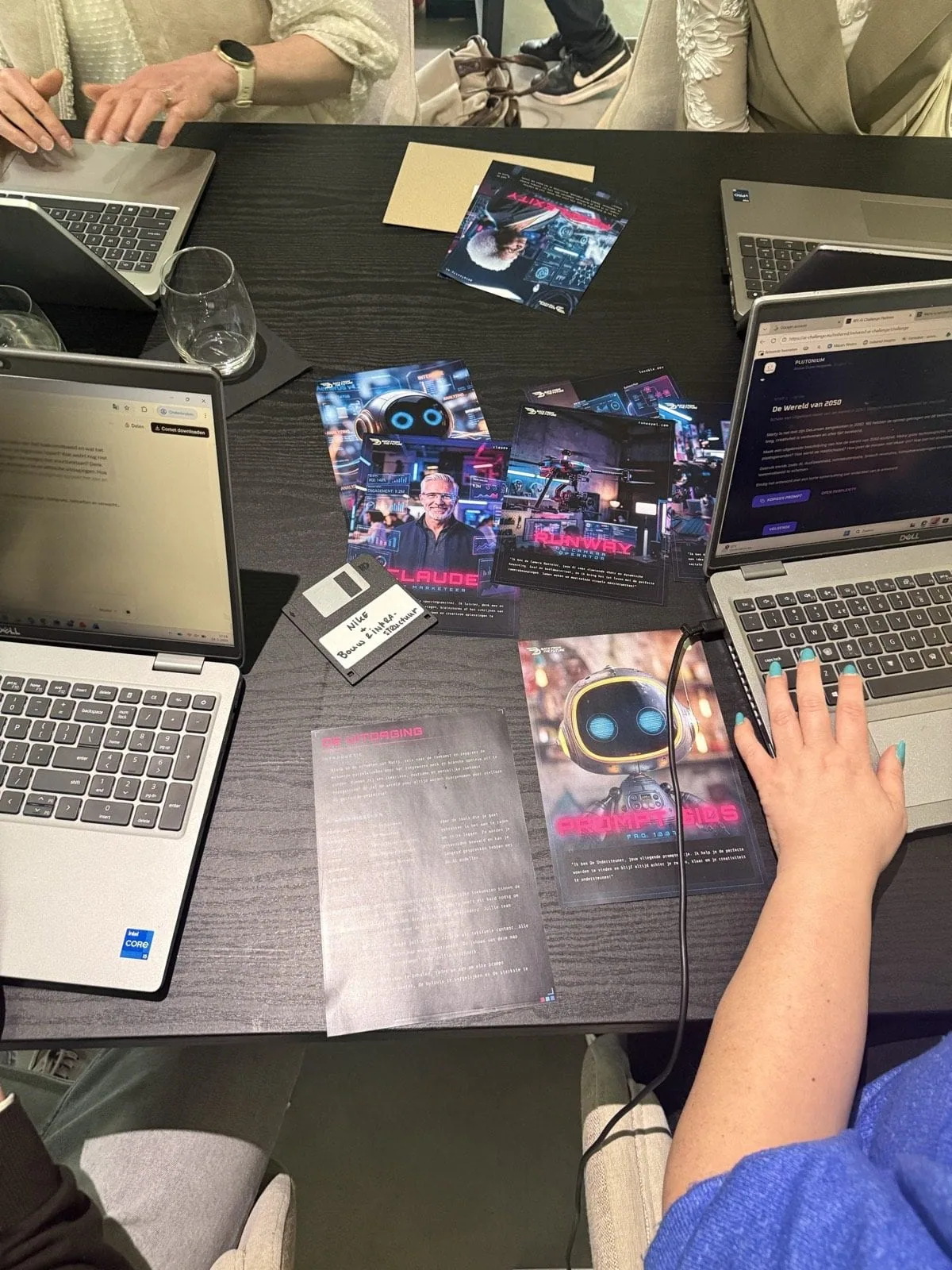
The machine remembers and routes. The human decides.
The Monday without a status meeting
Most agencies hold a weekly meeting to catch up on who is doing what. An email does that for us. Every Monday morning each team member gets, per client, only the things that need a decision: open questions, tasks running this week, deals that have stalled. You reply with a single letter on a line and that patches the administration within fifteen minutes. It is a work list to respond to rather than a report to read.
What keeps itself up to date
Email contact with clients logs itself into a timeline per client, so you can see at a glance when you last spoke to someone. External developments around our active clients get gathered weekly. And when one of our own systems breaks in the night, an agent writes a proposed fix, tests it, and leaves it ready. We only have to say yes or no. The machine repairs nothing irreversible without a human signing off.
What we deliberately did not automate
None of these agents takes over a judgement. They remove the retyping, the chasing of a status, the endless rebuilding of context. The thinking, meaning what this means for this client and what the next step is, stays with us. That is the line we hold everywhere: the machine remembers and routes, the human decides. Anything that touches money, a contract or the outside world keeps a human hand on it.
It took building, not buying
There is no tool you can buy that does this. It is assembled from separate pieces, each small enough to make in a week, each aimed at one recurring action. That is exactly the lesson we take to clients. Becoming AI-ready rarely starts with a purchase. It starts with a question: which piece of work do you do again every single week, and is that work worth designing properly once?
Why we dare to say this
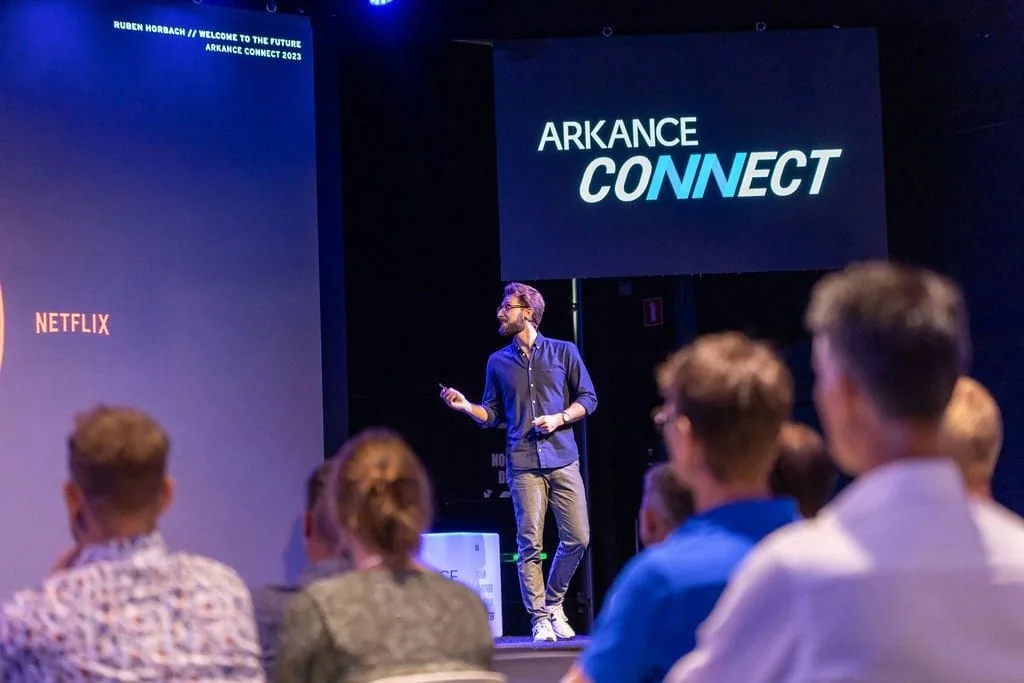
Claiming that adoption is a design question rather than a knowledge question is easy. We believe it because we redesigned our own work that way, and the tools we showed in a keynote now run in our own Monday. If you want to know what AI does to an organisation, the most honest answer we have is to come and see what it did to ours.

Ruben Horbach
Co-founder · Back From the Future
Ruben researches how organisations adopt AI meaningfully — not as technology, but as a change in work and people. He builds the agent infrastructure behind BFF and speaks about the near future of work.